301-605-4086
301-605-4086

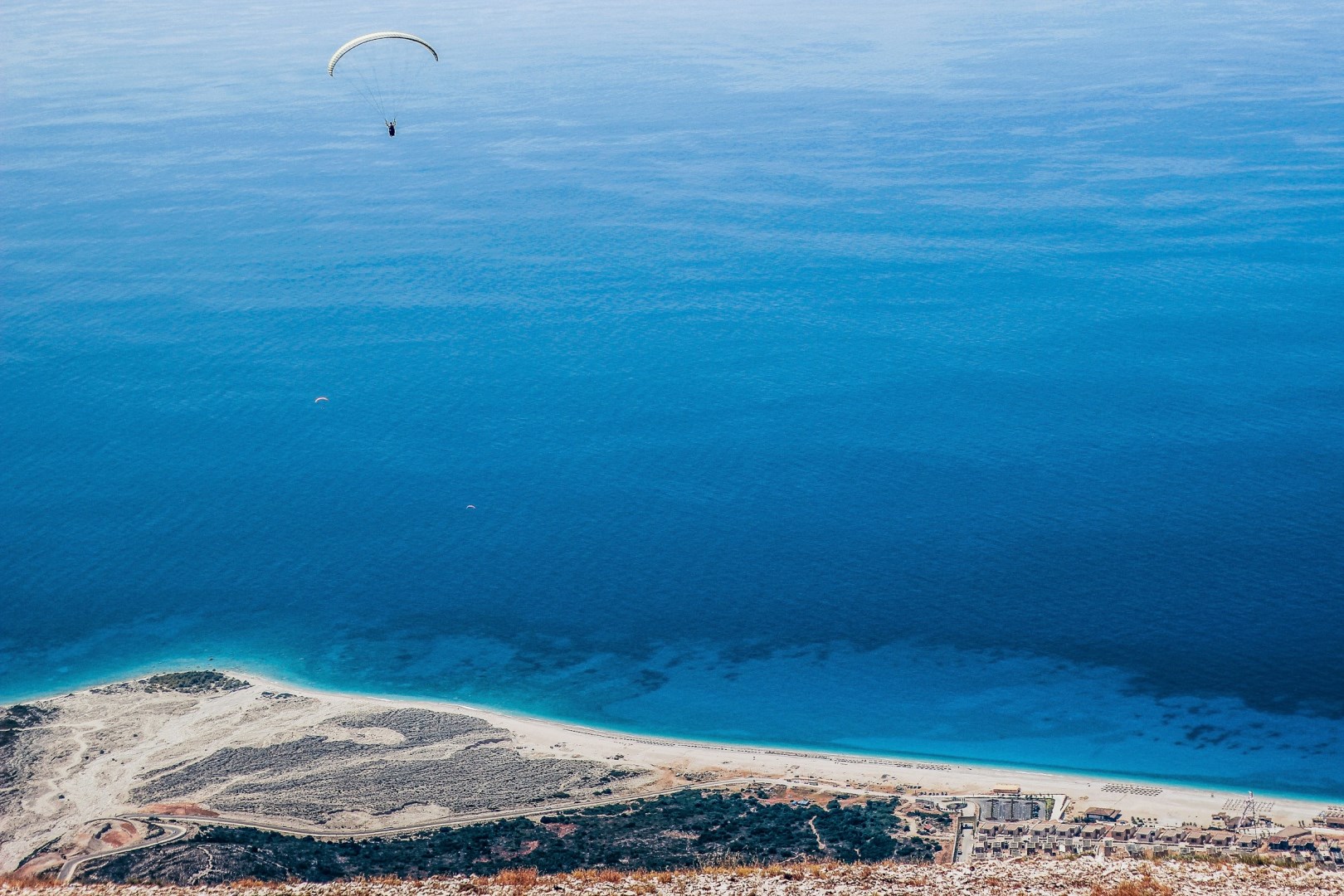
Llogara National Park lies in southern Albania within the Çika mountain range, overlooking the Ionian coast near the Albanian Riviera. The park rises from forested slopes to the Qore peak, with elevations ranging from about 450 to 2,018 meters. Its terrain includes steep limestone mountains, alpine meadows, rocky areas, and dense forests. The Llogara Pass forms an important route between the interior and the coast, with the road descending toward villages and beaches around Dhërmi and Palasë. The combination of high mountains and views toward the Ionian Sea gives the park its distinctive landscape.
Llogara has long served as a natural passage between inland Albania and the southern coast, and the area has several landmarks connected with historic travel routes. Qafa e Cezarit, or Caesar's Pass, is traditionally associated with the Roman general Julius Caesar and his movements through the region. Another well-known landmark is the Flag Pine, a protected natural monument with a trunk shaped by wind into a form resembling a waving flag. The park also contains mountain pastures and areas where traditional activities include grazing livestock and gathering medicinal and aromatic plants.
The park contains several vegetation zones, including Mediterranean forests and shrubs, oak woodland, beech forests, and alpine grasslands. Its forests include black pine, Bosnian pine, and Macedonian fir, while the protected area supports a wide range of plant and animal species. The Flag Pine viewpoint provides broad views across the Çika Mountains and the Ionian coast. Hiking routes lead through forest and mountain terrain, while the Llogara Pass provides access to viewpoints and trails. The park is also recognized as an important area for birds, including migratory species moving through the region.
Food in the Llogara area reflects the mountain and coastal character of southern Albania. Local restaurants and guesthouses commonly serve lamb, grilled meats, fresh dairy products, vegetables, herbs, and dishes prepared with olive oil, while seafood becomes more prominent toward the nearby Riviera coast. Honey and mountain herbs are also associated with the surrounding upland landscape. A notable feature of the park is its rapid change in vegetation with altitude, allowing Mediterranean shrubs, forest communities, and alpine grasslands to occur within the same protected area. This ecological variety is one of Llogara's defining characteristics.